
Categories
Buying, Pacific NW, Selling, Washington HomesPublished November 22, 2026
Navigating Sewer Line Connections and Septic Decommissioning

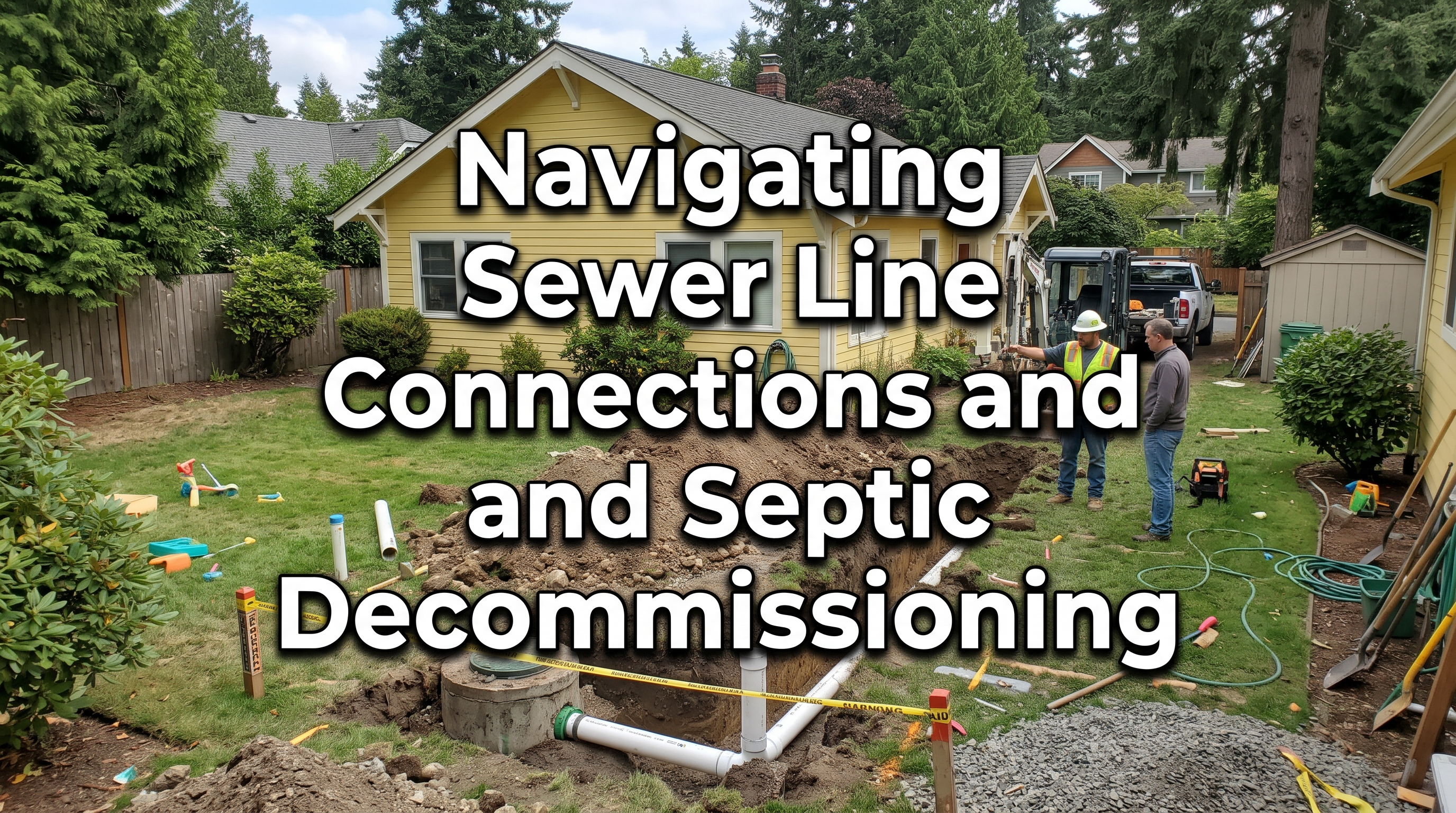
Underground Modernization: What Property Owners Must Know About Septic-to-Sewer Transitions
As suburban density and municipal infrastructure expand across East Vancouver, Hazel Dell, Southwest Portland, and Clackamas County, older residential parcels historically served by on-site septic tanks are being incorporated into municipal public sewer districts.
Whether you are a homeowner facing a required municipal sewer connection, or a buyer evaluating a property with an active or abandoned septic tank, understanding the conversion process protects your wallet and your real estate equity.
The Mandatory Connection Trigger Municipal sanitary authorities periodically extend public sewer mains down previously unserved residential streets.
- Health and Safety Mandates: If a public sewer line becomes active in the public street within a designated distance from your property (typically within 100 to 300 feet depending on jurisdiction), local environmental health regulations often mandate connection within a specified timeframe, especially if your existing septic system fails.
- System Development Charges (SDCs): Connecting to city sewer requires paying municipal hookup fees (System Development Charges) alongside private excavation costs to lay lateral pipe from your home to the street main.
The Septic Tank Decommissioning Protocol You cannot simply disconnect from a septic system and walk away; state environmental agencies enforce strict decommissioning rules:
- Pump, Disinfect, and Fill: A certified septic technician must pump out all remaining liquid effluent, sanitize the interior tank chamber, crush the concrete lid, and backfill the cavity with clean crushed rock, sand, or concrete slurry.
- Securing the Decommissioning Certificate: The technician submits formal documentation to the county health department, providing the property owner with an official decommissioning certificate essential for passing future buyer title reviews.
Frequently Asked Questions
- How much does it cost to connect to city sewer from a septic tank? Total conversion expenses typically range from $10,000 to $25,000, encompassing city system development connection fees, private trenching, street cut permits, and septic tank decommissioning.
- Does connecting to municipal sewer increase home property value? Yes, connecting to city sewer removes the land constraints and future replacement liabilities of an aging septic drain field, making the property significantly more marketable to buyers.
- Can you sell a home with an abandoned, un-decommissioned septic tank? Lenders and title companies require proof that abandoned septic tanks have been formally decommissioned in accordance with county health codes to ensure ground stability and safety.
Planning to buy or sell a property transitioning to municipal sewer? We connect clients with certified excavation contractors and environmental inspectors.
Call us today for professional real estate guidance!
Call: (503) 300-6614
We Can Help You Sell Your Home
Where luxury is an experience, not just a price point
or another way